Garage Door Spring Repair in Santa Clarita, CA
The bang you heard from an empty garage. Springs are rated in cycles and this valley's heat spends them faster, so we replace torsion and extension springs safely and in pairs.
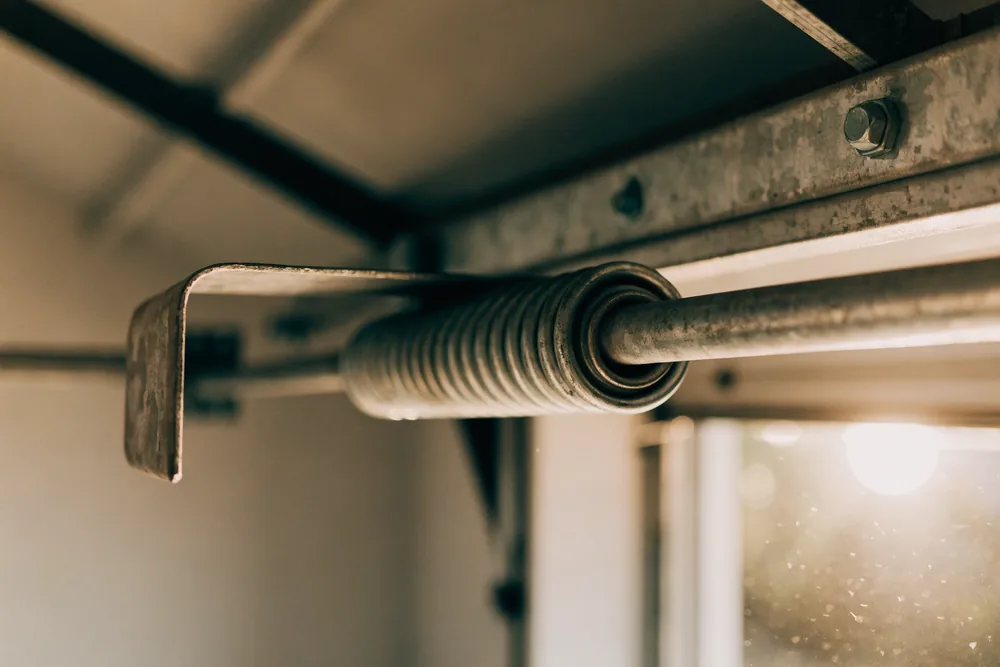
How springs actually fail
A torsion spring is rated in cycles, not years. A standard spring is about 10,000 cycles, and one cycle is a single full open and close. A household that opens the door four times a day reaches that in roughly seven years.
Heat shortens it. The Saugus weather station records a mean daily high of 94.3°F in August and a record of 117°F, and this valley swings hard between afternoon and night. Steel that works through a wide range every day does not reach the end of its rating comfortably, which is why spring calls here cluster in the hot months and why the bang so often comes at night, as the metal cools.
Why we replace both
On a two-spring door the pair is matched and has done the same number of cycles, so the survivor is usually months behind the one that went. Doing both in one visit costs less than a second call-out and keeps the door balanced, which is what protects the opener from carrying weight it was never meant to lift.
Do not do this one yourself
A wound torsion spring stores enough energy to break bones, and it needs winding bars and a torque figure rather than a screwdriver. This is the single repair we would rather talk you out of attempting, even though we are the ones who get paid either way.
Common questions
What is the average price to replace a spring on a garage door?
Angi put garage door spring replacement at an average of $250 in July 2026, and most single-spring jobs typically run $200-$300. A two-spring door sits at the top of that or a little above. Springs are specified to your door, so we confirm the size on site and give you the figure in writing before we wind anything. Torsion springs are sold by wire size, inside diameter and length, so the part price moves with the door. We diagnose on site and give you the written figure before any work starts.
How often should a garage door spring be replaced?
Springs are rated in cycles, not years — a standard spring is roughly 10,000 cycles, and one cycle is one full open and close. A household opening the door four times a day is at about seven years. Heat shortens that: the NWS station in Saugus records a mean daily high of 94.3°F in August against a record 117°F, and the valley swings hard between afternoon and night, so steel here works through a wider range every single day than it would at the coast.
Can you replace just one spring on a garage door?
You can, and we would advise against it on a two-spring door. The pair is matched and has done the same number of cycles, so the second one is usually months behind the first. Replacing both in one visit costs less than paying for a second call-out, and it keeps the door balanced, which is what protects the opener.
Is it worth fixing a garage door spring?
Yes — it is the repair that protects everything else. A door with a failed spring is dead weight on the opener, and running it that way is the fastest way to turn a $250 job into an opener replacement. It is also the repair we most strongly advise against doing yourself: a torsion spring under load carries enough energy to break a wrist.
What does a broken garage door spring sound like?
A single loud bang, usually from an empty garage, often at night when the metal has cooled and contracted. People regularly report it as a gunshot or something falling off a shelf. If you heard that and the door will not lift the next morning, you have your answer before we arrive.